Tuesday, March 8, 2022

US Government Gives Us Fake News About Brains and Memory

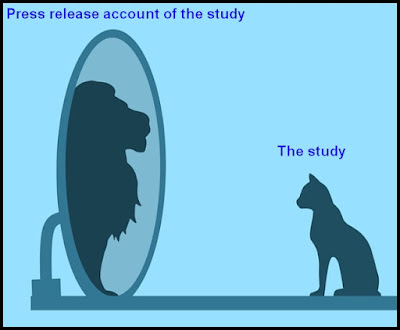
Courtesy of a sub-branch of the United States government, we have in today's science news an utterly bogus headline as phony as a three-dollar bill.  The headline is "Researchers uncover how the human brain separates, stores, and retrieves memories." The headline appears in a press release published by the National Institute of Neurological Disorders and Stroke, a branch of the National Institutes of Health (NIH), a branch of the US government.  

Scientists have no actual understanding of how memories form or how a human being is able to retrieve a memory. They have never been able to discover any credible coding mechanism or translation mechanism by which any of the main forms of human memories could be translated into neural states or synapse states. Computers have read-write heads to store information in particular places on a disk. The brain has nothing like a write component that could be used to store information in some particular part of the brain, and has nothing like a read component that could be used to read information from some particular part of the brain.  Computers have indexing systems and addressing systems that allow the instant retrieval of stored information. No such thing exists in the brain, which has no indexing system, no addressing, no coordinate system and no position notation system.  So the instant recall of a memory (given a single word or phrase) would seem to be impossible if such a recall occurs by the reading of neurons or synapses.  As discussed here, the extremely abundant levels of noise in the brain should make impossible both the accurate storage of learned information in the brai and the accurate retrieval of learned information from the brain.  And the many typically-overlooked slowing factors in the brain (such as synaptic delays) should make it impossible for a brain to be responsible for memory retrieval that can occur instantly.  Given the very short lifetimes of synaptic proteins (1000 times shorter than the longest length of time humans can remember things), and the high turnover of dendritic spines, no one has been able to come up with a credible theory of how brains could store memories that can last for 50 years.  Nor has any person been able to explain how the sluggish chemical operations in a brain could instantly form a memory, something humans routinely do. Learned memory information has never been discovered by examining any type of neural tissue. For example, not one single bit of a person's memory can be retrieved from a corpse or from some tissue extracted during brain surgery. 

The study in question ("Neurons detect cognitive boundaries to structure episodic memories in humans") involved 20 epilepsy patients who had electrodes planted in their heads, presumably for medical reasons such as determining the source of their seizures.  The patients were shown some videos, and some electrode readings were taken of electrical signals from their brain. In the press release we read the following:

"The researchers recorded the brain activity of participants as they watched the videos, and they noticed two distinct groups of cells that responded to different types of boundaries by increasing their activity. One group, called 'boundary cells' became more active in response to either a soft or hard boundary. A second group, referred to as 'event cells' responded only to hard boundaries. This led to the theory that the creation of a new memory occurs when there is a peak in the activity of both boundary and event cells, which is something that only occurs following a hard boundary."

I do not have access to the "Neurons detect cognitive boundaries to structure episodic memories in humans" paper, which is behind a paywall. But you can read for free the preprint of an identical-sounding paper by the same lead author (Jie Zheng) involving the same 20 epilepsy patients, the same claims, the same brain region (the medial temporal lobe), and the same experimental method involving taking electrode readings of brain signals while patients were watching videos.  That preprint ("Cognitive boundary signals in the human medial temporal lobe shape episodic memory representation") is not very impressive. [Note: years after writing this post, I found I can access the paper "Neurons detect cognitive boundaries to structure episodic memories in humans" using the link here. It is essentially the same paper as the preprint I criticized in this post.]

The extremely dubious method followed was to arbitrarily select hundreds of neurons for study, and to look for some tiny subset of neurons with electrical activity that could be correlated (merely in some fraction-of-a-second blip way) with memory activity of the human subjects when "boundary conditions" of videos were shown, using the nickname "boundary cells" or "event cells" for such neurons.  The number of such "boundary cell" neurons found was reportedly 7%.  The first giant problem is that given many billions of neurons in the human brain, there is no reason to think that the arbitrarily selected set of hundreds of neurons had any involvement at all in the storage or retrieval of a human memory. In fact, there is a very strong reason for thinking that such neurons almost certainly would have had no involvement at all in the storage or retrieval of a human memory: the fact that a few hundred is such a tiny fraction of many billions. 

The second giant problem is that there is every reason to suspect that the small percentage of supposedly correlated neurons found (reportedly 7%) is just what we would expect to be finding by chance, when examining neurons with random electrical signals having nothing to do with memory.  The authors claim that chance would have produced a result of only 2% rather than 7%. But since the paper did not involve any blinding protocol (such as should have been used for a study like this to be worthy of our attention), we should not be impressed by such a difference.  We do not know whether the 7% is an over-estimate arising from scientists seeing what they wanted to see in a biased analysis occurring partially because of a failure to follow a blinding protocol which would have reduced analytic bias.  Also, we do not know whether the 2% is an under-estimate arising from scientists under-estimating things so that they could report a result that they wanted to report, in a biased analysis occurring partially because of a failure to follow a blinding protocol which would have reduced analytic bias.  

A similar state of affairs holds in regard to the report of the detection of cells calls "event cells."  The authors claim to have found that 6% of the studied hundreds of cells had some fraction-of-a-second correlation characteristic allowing them to be classified as "event cells," and they claim that only 2%  of cells would have such characteristics by chance.  But since the authors failed to follow any blinding protocol, we cannot have confidence in either of these numbers.  

Under the very unlikely scenario that some meaningful difference in neuron response has been detected here, there is no particular reason to think that it is some neural sign of memory formation or memory retrieval. There are any number of reasons why brain cells might respond differently while videos are being shown, most of which have nothing to do with learning or memory.  For example, a different visual stimulus can produce a different neural response, as can a different muscle movement or a fleeting emotion.  We are told that the "boundary conditions" in the watched videos (supposedly producing different responses in the so-called "boundary cells") were accompanied by "sharp visual input changes." So any difference in neural response might have been merely a difference related to different visual perceptions, not something having to do with memory. 

In short, no robust evidence has been provided in this preprint that any cells were involved in memory formation or memory retrieval, and since the "Neurons detect cognitive boundaries to structure episodic memories in humans" paper by the same lead author seemed to be identical in all the main features, there is no reason to think that such a study provided any evidence for a brain involvement in  memory formation or memory retrieval. 

Here is an excerpt from the press release touting the "Neurons detect cognitive boundaries to structure episodic memories in humans" paper, one that uses a faulty line of reasoning:

"The researchers next looked at memory retrieval and how this process relates to the firing of boundary and event cells. They theorized that the brain uses boundary peaks as markers for 'skimming' over past memories, much in the way the key photos are used to identify events. When the brain finds a firing pattern that looks familiar, it 'opens' that event.

Two different memory tests designed to study this theory were used. In the first, the participants were shown a series of still images and were asked whether they were from a scene in the film clips they just watched. Study participants were more likely to remember images that occurred soon after a hard or soft boundary, which is when a new 'photo' or 'event' would have been created.

The second test involved showing pairs of images taken from film clips that they had just watched. The participants were then asked which of the two images had appeared first. It turned out that they had a much harder time choosing the correct image if the two occurred on different sides of a hard boundary, possibly because they had been placed in different 'events.'

These findings provide a look into how the human brain creates, stores, and accesses memories." 

There is no justification for claiming that the experiments discussed in the quote above tell us anything about the brain. The experiments discussed in the quote above are psychology experiments involving only human mental performance, without any measurement of the brain.  What we see here is a trick that materialists frequently use:  use some experimental results that do not involve any brain reading or brain scanning or brain measurement, and then claim that such results tell you something about the brain. When experimental results merely tell us that humans perform in such-and-such a way, or merely tell us that minds perform in such-and-such a way, we have no warrant for saying that such results tell us that the brain is performing in such-and-such a way.

Not one single bit of robust evidence has been provided in the press release that any understanding has occurred as to how a brain could store or retrieve a memory, nor has any robust evidence been provided for the claim that brains store or retrieve memories.  All of the old reasons for rejecting such claims remain as strong as ever. 

In today's NIH press release we have an extremely untrue statement saying, "This work is transformative in how the researchers studied the way the human brain thinks." No, the study described is just another example of a dubious neuroscience research design like I have seen countless times before.  The study was funded by the NIH's Brain Initiative, and the PR people of that project have before often groundlessly used the word "transformative" for meager research results.  I quote from a previous post of mine discussing the lack of major progress made by the Brain Initiative:

"So far the BRAIN Initiative has been running for four or five years, and has accomplished nothing extremely noteworthy. Our understanding of the brain has not dramatically advanced during those four or five years, and all the old mysteries of mind and memory seem as mysterious as ever. At this 'Achievements' link there is a discussion of what the BRAIN Initiative has accomplished so far. At the top of the text is a big bold headline saying 'Transformative Advances,' but the BRAIN Initiative has produced no such transformative advances. Go beyond the flashy spin on the web site, the high-tech glitter, and the discussion of things in progress that haven't yet yielded much, and you have not a single major accomplishment relating to our understanding of the mind or memory. You see in this section a video entitled 'The BRAIN Initiative – the First Five Years.' The video fails to list a single accomplishment of the BRAIN Initiative. Apparently all this work to mechanistically explain the mind is pretty much a flop and a failure so far."
science bluffing

Below is an extremely relevant quote from the well-worth-reading paper "A Call for Greater Modesty in Psychology and Cognitive Neuroscience":

"A romantic view holds that science is built on different values, such as integrity and honesty, as well as different systems of operation that mandate a dispassionate, calculated and systematic pursuit of the 'truth'. However, such a view of science is naïve. The incentive structure of modern science is such that a 'simplify, then exaggerate' strategy has become dominant, even if only tacitly. To get published in leading journals, to be awarded grants and to be hired as a postdoc or faculty member, a system-wide bias for novelty, exaggeration and storytelling has emerged (Huber et al., 2019; Nosek et al., 2012). The prizing of novelty over quality represents one overarching driver in the construction of a research culture beset by the widespread use of questionable research practices and low levels of reproducibility (Chambers, 2017; Munafò et al., 2017; Nelson et al., 2018; Open Science Collaboration, 2015; Simmons et al., 2011). Indeed, although there have arguably been recent successes (Shiffrin et al., 2018), many aspects of modern psychology and brain science resemble a creative writing class as much as a systematic science of brain or mind."

Wednesday, March 2, 2022

No Solid Principle Justifies "Brains Make Minds" Thinking

In the posts on this blog, I have shown that the facts do not justify conventional claims that the brain is the source of the human mind, and claims that memories are stored in brains.  But could there be some kind of general principle that justifies thinking that brains make minds? Let's look at some possible principles, and see how well they stand up to scrutiny. 

One possible principle that could be evoked to try to justify "brains make minds" claims is a principle that physical effects must be explained by physical causes.  But this is not a defensible principle to justify "brains make minds" thinking. For one thing, mental effects such as thinking and understanding are not physical effects. Secondly,  it would seem that many physical effects are not caused by physical causes, but are instead caused by mental causes. If John becomes enraged at Joe, and punches Joe,  that is not a physical cause causing a physical effect, but a mental effect causing a physical effect. 

Another possible principle that could be evoked to try to justify "brains make minds" claims is a principle that mental effects must be explained by physical causes.  But this is not a defensible principle to justify "brains make minds" thinking. Consider this case: John becomes very sad because his true love Mary has become very sad.  This would seem to be a case of a mental effect being produced by another mental effect, and countless other examples of such a thing could be given.  It would not seem to be true that mental  effects must always be explained by physical causes. 

Another possible principle that could be evoked to try to justify "brains make minds" claims is a principle that scientists must never explain things by imagining invisible causes. A person could evoke this principle, and then say, "So rather than evoking some invisible cause for things mental, we must think of a visible cause: the brain."   But this is not a defensible principle to justify "brains make minds" thinking. The fact is that outside the world of neuroscience, scientists often evoke invisible causes to explain things.  

To explain the movements of bodies in the solar system, scientists evoke a universal law of gravitation.  Gravitation is very much an invisible cause. You can observe someone falling from gravity, but the force of gravitation is itself invisible.  To give another example, cosmologists (scientists who study the universe as a whole) habitually evoke two never-observed invisible things as explanations: dark matter and dark energy.  Such invisible and never-observed things are pillars in the explanation systems of cosmologists. So it simply isn't true that scientists must never explain things by imagining invisible causes.  If neuroscientists were to stop telling us that our brains make our minds, and were to start teaching that our minds arise from some mysterious "mind source" external to our bodies, this would be nothing very different from what cosmologists have been doing for decades, by appealing to invisible never-measured dark matter and dark energy. 

Another possible principle that could be evoked to try to justify "brains make minds" claims is the long-standing principle of Occam's Razor. This was originally stated as the principle that "entities should not be multiplied beyond necessity." One could appeal to the Occam's Razor principle when trying to justify a belief that brains make minds.  The reasoning might go like this:

"If we imagine that a brain is the cause of all of the mind and the storage spot of memory, that is simpler than imagining some soul is involved. For if you imagine a soul, you must also imagine some soul-giver or a soul source; and then you are postulating two things, not just one (a brain). But it is better to avoid postulating multiple  things if you can postulate only one thing. That's the long-standing principle of Occam's Razor." 

This argument is fallacious because it misstates Occam's Razor. According to the wikipedia.org article on Occam's Razor, the principle is inaccurately paraphrased as the principle that "the simplest explanation is usually the best one."  It is not a valid principle that we should always prefer the simpler explanation or the simplest explanation.  For example, if we imagine atoms as being hard indivisible particles as some ancient thinkers did, that is simpler than imagining atoms as usually being structured of multiple electrons, protons and neutrons. But in this case the more complicated explanation postulating more things is the correct one.

Occam's Razor is the principle that "entities should not be multiplied beyond necessity," and that "beyond necessity" part is a crucial part of the principle. Occam's Razor is the principle is that we should not assume additional causal factors unless we need to do so.  Below are some examples of correct and incorrect applications of Occam's Razor:

(1) A man was shot in the back when a rifle bullet tore into his flesh. Should we assume that two people pulled the trigger, or only one? You don't need two people to pull a trigger. So according to Occam's Razor, we should assume only one person pulled the trigger. 

(2) A man was killed when he was simultaneously shot in the back and also struck by an arrow that hit him in the front. We cannot evoke Occam's Razor to say there was only a single killer.  Here there is a necessity for postulating multiple causes. So it is quite consistent with Occam's Razor for us to assume there were two killers, one shooting from the front, and another shooting from the back. 

In the case of the mind and the brain, there are multiple necessities for assuming that the mind arises from something beyond the brain. They include the very short lifetime of proteins in the brain (about 1000 times shorter than the longest length of time old people can remember things), the rapid turnover and high instability of dendritic spines, the failure of scientists to ever find the slightest bit of stored memory information when examining neural tissue, the existence of good and sometimes above-average intelligence in some people whose brains had been almost entirely replaced by watery fluid (such as the hydrocephalus patients of John Lorber),  the lack of any indexing system or coordinate system or position notation system in the brain that might help to explain the wonder of instant memory recall, the good persistence of learned memories after surgical removal of half a brain to treat severe seizures,  the ability of many "savant" subjects (such as Kim Peek and Derek Paravicini) with severe brain damage to perform astounding wonders of memory recall, the fact of very vivid and lucid human experience and human memory formation in near-death experiences occurring after the electrical shutdown of the brain following cardiac arrest, and the complete lack of anything in the brain that can credibly explain a neural writing of complex learned information, a neural reading of complex learned information, or a neural instant retrieval of learned information.

So you cannot credibly evoke Occam's Razor to defend a belief that the mind is merely a product of the brain. Such a principle only applies to discourage cases when multiple causes are evoked "beyond necessity." But for the reasons above we seem to have many a necessity for postulating some cause of the mind beyond the brain.  

Another principle that could be evoked to try to justify "brains make minds" claims is the principle that every characteristic of something  must be explained in terms of the internal components of that thing.  Unfortunately, this principle is not a valid one, as the examples below show:

  • The motion behavior of planet Earth is not at all explained purely by some internal components of our planet.  The motion behavior of planet Earth through the solar system is caused mainly by things outside of planet Earth, such as the sun and the universal law of gravitation which causes the sun to have a gravitational influence on the motion of Earth. 
  • The temperature of planet Earth is not at all explained purely by some internal components of our planet. The temperature of our planet is mainly explained by an external influence: the heat that comes from the sun. 
  • A person's opinions and behavior are not at all explained purely by some internal components of his body. Such opinions and behavior are largely determined by factors (such as social influences) coming from beyond the person's body. 
It is simply not true that scientists always explain something purely by discussing internal parts of that thing. Scientists frequently maintain that the main explanation for something's characteristics are causal factors outside of that thing. 

Another principle that could be evoked to try to justify "brains make minds" claims is a "follow the consensus" principle. It could be argued that there is a scientific consensus that memories are stored in brains, and that the mind is merely the product of the brain; so we should believe that.  But there are problems with this argument.

"Consensus" is one of the most abused words in scientific discourse. Very confusingly defined in multiple ways, "consensus" is a word that some leading dictionaries define as an agreed opinion among a group of people. The first definition of "consensus" by the Merriam-Webster dictionary is "general agreement: unanimity."  We have no proof that there is any actual consensus among scientists that brains make minds or that brains store memories.  To the contrary, there are signs of serious doubts about such a claim.  In science literature these days it is often said that the problem of consciousness is an unsolved problem.  Elsewhere we read scientists flirting with panpsychism, an explanation for consciousness different from the idea that your brain produces consciousness.  

Let us consider a very interesting type of alleged consensus that I may call a "leader's new clothes" consensus.  Let us imagine a small company of about 20 employees that has a weekly employee meeting every Monday morning. On one Monday morning after all the employees have gathered in a conference room for the meeting, the company's leader comes in wearing flashy new clothes that are both very ugly and ridiculous-looking. Immediately the leader says, "I just paid $900 for this new outfit -- raise your hand if you think I look great in these clothes."   

Now if it is known that the leader is someone who can get angry and fire people for slight offenses, it is quite possible that all twenty of the employees might raise their hand in such a situation, even though not one single one of them believes that the leader looks good in his ugly new clothes.  In such a case the "public consensus" is 100% different from the private consensus. A secret ballot would have revealed the discrepancy. 

The point of this example is that appeals to some alleged public consensus are notoriously unreliable. So arguing from some alleged consensus of some group is a weak and unreliable form of reasoning.  The only way to get a reliable measure of the opinion of people on something is to do a secret ballot, and there virtually never occurs secret ballots of scientists asking about their opinions on scientific matters. We have no idea of whether the private beliefs of scientists differ very much from the public facade they present.  For example, we have no idea whether it is actually true that almost all  scientists think your mind is merely the product of your brain. It could easily be that 35% of them doubt such a doctrine, but speak differently in public for the sake of "fitting in," avoiding "heresy trouble" and seeming to conform to the perceived norms of their social group. 

The history of science shows many "consensus beliefs" that were later discarded. Less than a century ago, eugenics was once wildly popular in US colleges, but now stands in disrepute. It was once a reputed scientific consensus that homosexuality was a mental illness. Now anyone claiming that in a college would be condemned by his college superiors. To give another of many other examples I could cite, Semmelweis accumulated evidence that cases of a certain kind of deadly fever could be greatly reduced if physicians would simply wash their hands with an antiseptic solution, particularly after touching corpses. According to a wikipedia.org article on him, "Despite various publications of results where hand washing reduced mortality to below 1%, Semmelweis's observations conflicted with the established scientific and medical opinions of the time and his ideas were rejected by the medical community." Thousands died unnecessarily, because of the stubbornness of experts, who were too attached to long-standing myths and cherished fantasies such as the idea that physicians had special "healing hands" that would never be the source of death. The wikipedia article tells us, "At a conference of German physicians and natural scientists, most of the speakers rejected his doctrine, including the celebrated Rudolf Virchow, who was a scientist of the highest authority of his time."  Decades later, it was found that Semmelweis was correct, and his recommendations were finally adopted.   The wikipedia.org article notes, "The so-called Semmelweis reflex — a metaphor for a certain type of human behavior characterized by reflex-like rejection of new knowledge because it contradicts entrenched norms, beliefs, or paradigms — is named after Semmelweis, whose ideas were ridiculed and rejected by his contemporaries." 

More recently, in the year 2020 we were told countless times in the mainstream press that there was a scientific consensus that COVID-19 had arisen through a purely natural process, spreading from some animals that had the virus before humans. This alleged scientific consensus held for only about a year, until 2021, when many scientists started to confess that we don't know whether COVID-19 did or did not arise from a lab leak.  Below is from a Reuters article on a US government report on COVID-19 origins:

"The ODNI report said four U.S. spy agencies and a multi-agency body have 'low confidence' that COVID-19 originated with an infected animal or a related virus. But one agency said it had 'moderate confidence' that the first human COVID-19 infection most likely was the result of a laboratory accident, probably involving experimentation or animal handling by the Wuhan Institute of Virology."

Results such as this should shake our confidence in the idea that there is something compulsory about some alleged scientific consensus.  People tend to think that today's scientists have got things right because they have "state-of-the-art" equipment. Centuries from now (armed with vastly more sophisticated tools) scientists may look back on today's scientists the way today's scientists look back on 17th-century scientists, and think things like, "I can't believe way back then they were trying to figure out the mind by using those silly MRI machines."  Such scientists of the future may scorn today's community of neuroscientists, regarding it as a dysfunctional culture plagued by poor practices, overconfidence and hubris. 

To put things concisely, social proof is no proof, and "follow the herd" does not necessarily lead you to the truth. 


Another principle that could be evoked to try to justify "brains make minds" claims is a principle that scientists must only believe in things natural, so we can't believe in something supernatural (such as a soul that could explain the human mind).  The principle is far from a self-evident one. Given sufficient evidence for the supernatural, it would seem that scientists should believe in that, because their supreme rule should be "follow the evidence wherever it leads" rather than "only believe in things you think are natural."  Secondly, believing in some non-neural cause of the human mind does not necessarily require a belief in the supernatural. Humans could get something like a soul by means of some mysterious cosmic infrastructure that in some sense operates "naturally," rather than by one-by-one miraculous dispensations. So believing in a non-neural source of the human mind does not necessarily require you to believe in something miraculous or supernatural. 

In short, there is no sound general principle that can be evoked to justify thinking that the human mind is mainly a product of the brain, and that the brain is the storage place of memories.  

Thursday, February 24, 2022

The Press Often Gives Us Fake News About Brains

A significant fraction of the neuroscience news these days contains exaggerations, extremely dubious interpretations or downright falsehoods. Sometimes these falsehoods are so brazen that they must be branded as fake news. An outrageous example of fake news was a recent story in the British new source The Independent, a story with the phony headline, "Brain scan reveals patient’s ‘last thoughts’ just before they died in landmark study." Below are some of the reasons the headline and the story are as phony as a three-dollar bill: 

  • The scientific study made no claim to have revealed the thoughts of the dying 87-year-old patient, nor did it even make any guess about such a thing. 
  • No one is quoted in the article referring to last thoughts.
  • The headline uses the phrase "just before they died," suggesting there were multiple patients involved in the new study; but there was only one patient. 
  • The patient did not actually have his brain scanned as he died. Brain scans are done with MRI machines, and the patient was not being scanned in an MRI machine or any similar machine when he died.  Instead, there was a merely a reading of electrical activity by means of EEG electrodes. 
  • There was nothing "landmark" about the study, as there have been electrode readings of the brain activity of numerous previous patients as they died.  The subtitle of the story makes the untrue claim that there were "first-of-a-kind brain scans," when nothing "first-of-a-kind" was done, and no brain scan was done.  
  • As discussed below, there are very strong reasons for assuming that the patient in question was unconscious in the moments before death, and that he therefore was not thinking about anything just before dying. 

We don't need to read very far to find out how phony the story is. The headline claims "brain scan reveals patients 'last thoughts,'" but the subtitle states this: "First-of-a-kind brain scans of dying person indicate they may have been making ‘last recall of life’, scientists say." So the headline and the subtitle contradict each other. If scientists were merely speculating that the patient may have been recalling his life, then nothing has been actually revealed about what the patient was thinking.  Of course, the idea that you can figure out  someone's thoughts by looking at EEG readings is as nonsensical as the claim that you can find out someone's future life events by reading lines on his palms.  EEG readings are mere squiggly lines without any semantic content. 

The untrue "first-of-a-kind" claim is partially the fault of the Frontiers press release, which made this untrue claim: "This unexpected event allowed the scientists to record the activity of a dying human brain for the first time ever." You can very easily find out how untrue this claim is by using a Google search phrase of "EEG reading of dying patient," and using the Tools option to restrict the search results to be from 1/1/1990 to 1/1/2021.  In your search results you will get papers such as the 2017 paper "Electroencephalographic Recordings During Withdrawal of Life-Sustaining Therapy Until 30 Minutes After Declaration of Death," and this 2017 press article about the study (which shows some of the EEG readings from four dying patients). 

Besides making the untrue claim above, the Frontiers press release is guilty of getting the ball rolling on this fake news story, by suggesting the utterly groundless idea that the EEG readings from a seizure-wracked dying patient in a coma did something to suggest the patient was recalling events in his life.  Here is a quote from the press release:

" 'We measured 900 seconds of brain activity around the time of death and set a specific focus to investigate what happened in the 30 seconds before and after the heart stopped beating,' said Dr Ajmal Zemmar, a neurosurgeon at the University of Louisville, US, who organised the study. 'Just before and after the heart stopped working, we saw changes in a specific band of neural oscillations, so-called gamma oscillations, but also in others such as delta, theta, alpha and beta oscillations.' Brain oscillations (more commonly known as ‘brain waves’) are patterns of rhythmic brain activity normally present in living human brains. The different types of oscillations, including gamma, are involved in high-cognitive functions, such as concentrating, dreaming, meditation, memory retrieval, information processing, and conscious perception, just like those associated with memory flashbacks. 'Through generating oscillations involved in memory retrieval, the brain may be playing a last recall of important life events just before we die, similar to the ones reported in near-death experiences,'  Zemmar speculated. "

Notice the nonsense reasoning here. It's basically this:

(1) People have different types of brain waves, which occur when they do various things like thinking, recalling, meditating (which does not involve recall), and perceiving. 

(2) Some brain waves were measured in a person who died. 

(3) So maybe he was recalling important life events. 

This is nonsensical logic. The study has not provided the slightest reason for thinking that the dying person was remembering past events in his life. To the contrary, we can think of the strongest reason why a person would not be recalling important life events after having a sudden heart attack. The sudden heart attack would produce great pain and great distress, and under such conditions if you were conscious you would be no more likely to be recalling past life events than you would be if someone suddenly stabbed you in the chest. In fact, sudden fatal heart attacks instantly produce unconsciousness which should prevent anyone from engaging in thinking about past events.  

The scientific paper describes the patient's condition before death, and we learn of a state so dire that any speculation about the patient reliving past memories seems supremely absurd. We are told the patient was a 87-year-old who had suffered a fall, and who was in a coma (rating 10 on the Glascow Coma Scale, meaning a moderate coma). Here is how the paper describes the patient's death. 

"An electroencephalography (EEG) was obtained, which showed non-convulsive status epilepticus in the left hemisphere. There were at least 12 identified electrographic seizures, after which a burst suppression pattern spontaneously developed over the left hemisphere (Figure 2A).  Shortly thereafter, electrographic activity over both hemispheres demonstrated a burst suppression pattern, which was followed by development of ventricular tachycardia with apneustic respirations and clinical cardiorespiratory arrest. After discussion with the patient’s family and in consideration of the 'Do-Not-Resiscitate (DNR)' status of the patient, no further treatment was administered and the patient passed away."

Given such a patient state, it is obvious folly to be speculating  that such a patient was reliving past memories just before death. Status epilepticus is a life-threatening seizure of particularly long length. Apneustic respirations are a kind of gasping suggesting death is very near.  Twelve seizures would have produced a "witch's brew" of brain signals showing up on EEG readings, and from such a thunderstorm of brain signals nothing reliable can be inferred about what a patient was thinking or recalling. Since the patient was in a coma and plagued by a dozen seizures that disrupt mental processes such as recollection if it is occurring, it makes no sense at all to speculate that the patient was thinking about or recollecting anything.

Giving us a headline as phony as the headline quoted above from the Independent, the Daily Mail gives us this fake news headline about this patient: "Our lives really DO flash before us: Scientists record the brain activity of an 87-year-old man at the moment he died, revealing a rapid 'memory retrieval' process."  This headline is as phony as a three-dollar bill.  Zero evidence has been provided in the scientific paper of any memory retrieval around the time of death,  and the patient's condition gives the strongest reason for disbelieving that any such thing was occurring. A similar fake news headline occurs on www.bbc.com, showing that once an expert lights a fake news match, the fake news fire will spread even to sources the average person regards as having high journalistic standards. 

There is an abundance of reliable evidence that people have extraordinary near-death experiences after their hearts have stopped.  Such experiences often include what are called life-review experiences, in which a person may recall important moments from his life.  Neuroscience has done nothing to explain such near-death experiences. 

The fact of such experiences is a major reason for rejecting all claims that human consciousness is a product of the brain, and that memories are stored in brains.  According to such claims, no one should have any mental experiences at all  other than unconsciousness after his heart stops. Within a few seconds after a heart stops, a brain shuts down its electrical activity. This was shown by the 2017 paper I previously mentioned, "Electroencephalographic Recordings During Withdrawal of Life-Sustaining Therapy Until 30 Minutes After Declaration of Death," Figure 1 of that paper shows EEG readings of four patients for thirty minutes after their hearts stopped.  The readings are flat lines, except for three or four little blips that can be compared to momentary muscle twitches of a corpse a few minutes after death.  The Zemmar study does nothing to challenge ideas that brains promptly shut down as soon as a heart stops. 

On the same day that we had the fake news headlines quoted above,  we had another fake news headline, one that declared, "New project creates digital clones of human brains to help treat neurological disorders." No one has created any such thing as a digital clone of the human brain. We can also be quite confident that no one ever will do such a thing, because the act of measuring all of the synapse states and neuron states of a brain would inevitably kill a person, or require the cutting away of so much tissue that you would never be left with a clone of the person's original brain state.  In the text of the story we read that the work being done is merely the creation of some "virtual model," something not at all a clone of the brain. 

fake science news

Postscript
: Vice.com tries to squeeze some more juice out of the fake news story about the dying 87-year-old. It gives us an article with the misleading title "The Search for Meaning in a Mysterious Brain Signal at Death." There was nothing mysterious about the brains signals recorded.  There are some good aspects of the Vice.com story. The story quotes a doctor named Chalwa:

“ 'They have no idea what that guy is experiencing,' Chawla said. It’d be different if the man survived, and reported that he experienced a recall of memories. But since he died, we have no idea what happened. To say otherwise, 'is frankly appalling,' Chawla said."

Correct  -- the behavior of so many people in this matter is truly appalling and unprofessional.  

Tuesday, February 15, 2022

Beware of Neuroscientists Using Cell Nicknames

Today is a typical day in the science news, because we see what we so  often see: a press report claiming that neuroscientists have discovered something they have not actually discovered.  The  report is a press release from the University of Bonn with this headline: "'Math neurons' identified in the brain."  Below this we have a subtitle reading, "When performing calculations, some neurons are active when adding, others when subtracting."  While we know that humans can perform math calculations, there is no evidence that either brains or neurons perform math calculations.  Guilty of serious methodological flaws, the scientific study in question has not found any good evidence that some neurons are more active than other neurons during math calculations. 

The study (entitled "Neuronal codes for arithmetic rule processing in the human brain") can be read in full here.  Nine epilepsy patients had electrodes attached to areas of their brains for medical reasons to determine the source of seizures they were having. Using such subjects, scientists attempted to find signs of greater activity in certain areas of the brain while the subjects performed a math task. Such a sample size of nine subjects was too small for a robust result.  Fifteen subjects per study group is the minimum for a moderately persuasive result. When you use fewer than 15 subjects in a study group, there is a too high a chance of a false alarm. 

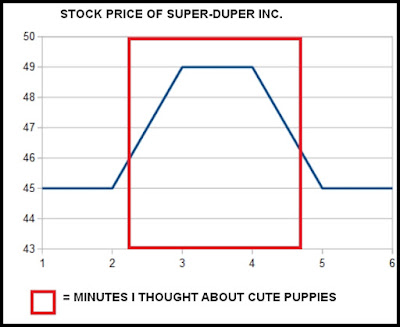
The scientists recorded the electrical activity of about 600 neurons in each subject.  They claim that a small percentage (about 5%) fired at a greater rate during addition or subtraction.  But we would expect to get such a result by chance.  Similarly, if I track for twenty minutes the minute-to-minute ups and downs of 600 stocks being traded on the New York Stock Exchange,  and look for stocks that rise in price while I am thinking about cute puppies, I will probably be able to find that about 5% of the stocks seemed to have higher prices when I am thinking about cute puppies.  This does nothing whatsoever to show that my thoughts about cute puppies have any influence on stock prices.  I would in such a case have merely found a chance correlation that I would expect to get when comparing two unrelated things that fluctuate (stock prices and the objects of my attention).  In all likelihood this is all that has turned up in the new "Neuronal codes for arithmetic rule processing in the human brain" study.  The authors have merely found the type of chance correlation in electrical activity that we would expect to see in some small percentage of neurons (maybe 5% or so) when comparing the ups and downs of that electrical activity to something else that does not affect such electrical activity.  No robust evidence has been provided of any causal effect. 

Figure 2 of the paper is a line graph showing the ups and downs of the firing rate of four neurons, with two of the neurons showing increased activity during math calculation. The caption of the graph says it is showing activity for "four example neurons." When we remember that the electrical activity of about 600 neurons was tracked, we should not regard Figure 2 as being evidence for any causal effect. The authors probably cherry-picked some neurons out of their set of about 600, looking for a few with an electrical activity that seemed to rise during math calculation. 

Similarly, if I did my experiment tracking the minute-to-minute price fluctuations of 600 stocks, while I was thinking about cute puppies, I could cherry-pick one stock with the strongest chance correlation, and produce a graph like the one below, similar to the graphs in Figure 2 of the paper. 

spurious correlation

How is it that we can judge whether a study like this has given robust evidence of anything (as opposed to showing only variations we would expect to get by chance)?  We can look for 4 different things:

(1) Pre-registration.  When pre-registration is used, scientists publicly pledge beforehand how data will be gathered and analyzed, reducing the chance the authors will be doing a kind of a "fishing expedition" in which they feel free to keep "slicing and dicing" the data dozens of ways until it seems to show the desired result: an approach that may be described as "keep torturing the data until it confesses." 

(2) A blinding protocol.  A blinding protocol is used to reduce the chance of experimental bias, an effect in which experimenters tend to see or find whatever result they hope to see. 

(3) Control groups. When control groups are used, there are a group of subjects who do not receive the stimulus being applied to the main experimental group.  The reaction of the group receiving the stimulus can be compared to a group that did not receive the stimulus. 

(4) Adequate sample sizes. An experiment should include a sample size calculation to determine the minimum number of subjects needed to provide robust evidence of a real effect.  If such a calculation is not done, we should expect 15 subjects per study group as a minimum. 

The new "Neuronal codes for arithmetic rule processing in the human brain" study fails on all these quality measures.  The study was not a pre-registered study. The study failed to use any blinding protocol, and the paper does not use the word "blind" or "blinding."  The sample size used (nine) is smaller than the minimum of 15 needed for a robust experimental result, and no mention is made of a sample size calculation.  Although the paper uses the word "control" multiple times, the study did not use control groups.  The use of a control group would have clarified that the main result reported is meaningless.  In the control group we would have seen about 5% of neurons with increased activity when the subjects were not asked to do any math work.  This would have helped make clear that the reported variations are merely chance variations, not actually evidence of "math neurons."

Being guilty of several methodological defects, the  new "Neuronal codes for arithmetic rule processing in the human brain" study fails to provide any good evidence that there are "math neurons" in the brain, and fails to provide any good evidence of any such thing as "neuronal codes for arithmetic rule processing."  Similar problems will be found in studies claiming to provide evidence for "time cells" and "place cells" in the brain, as discussed here and here.  

The same type of methodological defects are found in another memory study released this week. Its press release groundlessly claims, "In a scientific first, researchers at the University of California, Irvine have discovered fundamental mechanisms by which the hippocampus region of the brain organizes memories into sequences and how this can be used to plan future behavior." A look at the Nature paper shows that a way-too-small sample size was used (only five rats),  that no blinding protocol was used, that no control group was used, and that the scientists used some incredibly complicated "keep torturing the data until it confesses" approach that they presumably  made up as they went along (since the paper makes no mention of pre-registering an exact hypothesis and pre-registering data collection and analytic methods). 

A brain scan study looked for neural correlates of math calculation in adults and children, using a much better sample size of 20 adults and 80 children. As shown in Figure 2, the study found brain activity variations of only about 1 part in 200 or smaller, which is about what we would expect to have got purely by chance, even if the brain is not involved in calculating. The bar chart below puts such results in perspective. 

neural correlates of thinking and recall

Saturday, February 12, 2022

New Study Confesses "Relationship Between Brain Structure and Function and Cognitive Function Is Still Largely Underexplored"

For decades neuroscientists have taught or attempted to suggest the unwarranted claim that brain scans suggest the human brain is the source of human cognition. Given the great numbers of such claims that have been made over the past several decades, a reader may be surprised to read that a new scientific paper states, "We report the first systematic review that assesses how information from structural and functional neuroimaging methods can be integrated to investigate the brain substrates of cognition." This should raise our suspicions that brain imaging can help establish that cognition is produced by brains. If such a claim is true, why is it only now (in the year 2022) that we would be seeing "the first systematic review that assesses how information from structural and functional neuroimaging methods can be integrated to investigate the brain substrates of cognition"? Such reviews should have been done before any claims were made that brain imaging helps show the brain is the source of human cognition, not after such claims had been made for decades. 

We seem to have here in such "jumping the gun" behavior another example of what biologists have very long been guilty of: claiming some triumph has been achieved before they have achieved necessary prerequisites of such a claim, like some mother claiming that her small baby can run before the baby has even learned how to crawl or walk.  Something similar went on in discussing human origins, with biologists boasting for many decades that they had successfully explained the origin of the human race, when they had not achieved some of the most important prerequisites that should have been achieved before making such a claim (such as understanding the molecular nature and organization of protein molecules, the structural organization of cells, and the still not-understood riddles of the origin of language and the morphogenesis origin of an immensely organized adult human body from the million-times simpler simplicity of a single fertilized ovum). 

After its abstract the new paper ("Relating cognition to both brain structure and function: A systematic review of methods") starts out by giving us a classic example of what occurs so very often in neuroscience papers: an invalid citation in which some dubious claim is followed by a reference to a paper that did not establish such a claim.  We read, "Cognitive function and adaptive behaviour rely on structure and dynamics of largescale neural networks (Friston, 2002)."  The citation is to a paper that merely states, "We try to show that learning can be implemented in a biologically plausible way." 

After getting 1923 papers from database searches, and removing 251 duplicates, the new study had 1673 papers. An assessment "for eligibility" reduced this total to only 159 papers, and a further application of quality criteria reduced this number to only 102.  Such extremely high rates of exclusion should raise our suspicions. Why did only 102 out of 1923 papers meet the study's eligibility and quality criteria standards? This is what we might expect if the vast majority of experimental neuroscience papers are using faulty methods or making invalid claims. 

It seems that the number of papers that should have been excluded would have much higher.  The new paper lists four reasons why it excluded papers. None of the reasons listed are one of the top problems with experimental neuroscience papers these days. Such reasons include the following:

(1) A failure to do a sample size calculation needed to determine the number of subjects needed for a robust result. 

(2) The use of too-small study group sizes, in which the number of subjects is less than the minimum (about 15) needed for a moderately persuasive result. 

(3) A failure to declare and implement a thorough blinding protocol to prevent experimental bias in which the experimenters tend to find whatever result they were hoping to find. 

(4) A failure to pre-register a detailed plan for gathering and analyzing data, leaving researchers with freedom to run a "fishing expedition" kind of study in which they can "slice and dice" data in countless different ways until they find a result they were hoping to get. 

How many of the 102 papers would have survived a quality check excluding papers with such methodology flaws? Probably very few, because the prevalence of poor methodology is epidemic in neuroscience these days, with most experimental studies being guility of two or more of these failures.  Then there is the fact that according to a pie chart in the new paper, only about one quarter of the 102 papers used "direct inference," with about half using some "indirect inference" method that is less reliable than direct inference. 

In the new paper's summary we have this confession, which should raise further doubt in anyone thinking brain scans have supported claims that brains make minds. We read this:

"First, it became apparent that fMRI protocols have taken clear dominance over other functional imaging techniques in this research field. As mentioned in the introduction of this review, fMRI method suffers from low temporal resolution and is not a direct measure of neural activity."

You should never expect to get in a neuroscience paper a really candid discussion of how the boasts of neuroscience do not match experimental results.  Neuroscientists are members of a conformist belief community, and within such a community there are taboos that cannot be violated and speech customs which scientists are pressured into following. But in the last paragraph of the new paper we do get a kind of watered-down confession about the shortfall of neuroscientists in proving their belief dogmas.  We read this: "This review demonstrated that the relationship between brain structure and function and cognitive function is still largely underexplored."  A more candid statement would have stated, "The relationship between brain structure and function and cognitive function has not yet been established."

The study here gives a rather interesting poll of neuroscientists. There are some surprising answers. Based on their standard claims about brains and minds, we would expect close to 100% of neuroscientists would agree with this statement: "If it were possible to transplant our brain to another body we would still be ourselves, albeit in a new body."  The actual percentage of polled neuroscientists who agreed with this statement was only 51%. Could this be because deep down inside a large fraction of our neuroscientists don't really believe some of the things they teach?  I don't know. 

Also interesting was the fact that only 6% of the polled neuroscientists agreed with the statement that "memory is stored in the brain much like in a computer, that is, each remembrance goes in a tiny piece of the brain."  82% of them disagreed, with 12% saying they did not know.  I can understand why so few neuroscientists would have agreed with such a statement. If a neuroscientist claims that each memory is stored in one tiny spot of the brain, this raises the problem of how a brain could be able to instantly read from just the right tiny spot when an instantaneous recollection occurs.  For example, if I suddenly hear the phrase "death of Abraham Lincoln" and instantly remember "assassination by John Wilkes Booth at Ford's Theater, April 14, 1965," how was I able to find the exact tiny spot where that information was stored, in a brain without any coordinate system or indexing system or position notation system? 

Neuroscientists try to get around this problem by imagining that a memory is stored in not just one tiny spot in the brain but multiple spots in the brain. Unfortunately, this does not make things better for the theory that we retrieve memories from brains; it makes things worse. If, for example, my memory of how Abraham Lincoln died was scattered among several different tiny spots in the brain, then my instant retrieval of that memory from a brain without any coordinate system or addressing system or indexing system would be even more inexplicable than if I were to get the information all from a single spot. I would now have the additional difficulty of explaining how this spatially scattered information was all instantly retrieved from just the right places and also pieced together to make a single seamless integrated memory.  No neuroscientist has even given a credible explanation of instant memory recall, and the only credible explanation of such a thing would one abandoning the notion of a neural storage of memories. We do not recall at the speed of brains; we recall at the speed of souls. 

memory retrieval

Friday, February 4, 2022

Why ESP Discredits the "Brains Make Minds" Claim

The evidence for ESP is overwhelming. You can read about some of that evidence by reading my posts below:

  • The post here discusses abundant ESP evidence gathered by Soviet scientists, including evidence of "telepathic knockouts," in which a person could be made unconscious at the command of a distant person, who might be as much as a thousand miles away. 
  • The post here discusses a New York Times article reporting how a court case was won by an amazing demonstration of telepathy by the person who had been arrested. 
  • The post here discusses many impressive feats of telepathy, including several very dramatic cases witnessed and documented by a physician. 
  • The post here discusses cases of people very noticeably feeling a strange worry or distress at the time of a distant disaster involving one of their friends or loved ones. 
  • The post here discusses a phenomenon of eyeless sight abundantly documented by an early twentieth century observer (and corroborated by many subsequent observations). 
  • The post here discusses many cases of dramatic ESP performed by hypnotized subjects. 
  • The post here describes an extremely well-documented subject performing ESP, the blind or nearly-blind invalid Mollie Fancher who while blindfolded passed endless tests of paranormal perception, and who routinely would correctly describe unseen visitors arriving at her door, outside of her field of view. 
  • The post here discusses abundant evidence of ESP gathered by a chemistry professor at a very prestigious university. 
  • The post here discusses compelling evidence of ESP gathered by a doctor. 
  • The post here discusses a summary of compelling experimental evidence for ESP, published on the mainstream Cornell physics paper server. For example, a summary of ESP tests using the ganzfeld protocol reveals that that over 46 years of tests, there were 4841 trials, producing 1520 successes, a hit rate of 31.5%, far over the expected-by-chance hit rate of 25%. 
  • The post here describes astonishing ESP results produced by the blind or nearly-blind Loraina Brackett. 
  • The post here describes extremely dramatic ESP results produced by a Mrs. Morel studied by Eugene Osty. 
  • The post here discusses extremely dramatic ESP results listed in a government document. 
  • The post here discusses some dramatic cases of clairvoyance. 
  • The post here discusses the very well-documented case of Alexis Didier, who demonstrated clairvoyance countless times in public exhibitions.
  • The post here discusses a six-year investigation of the French Royal Academy of medicine, one which resoundingly found in favor of the reality of clairvoyance. 
  • The post here discusses dramatic evidence for spontaneous ESP gathered in abundance by Louisa Rhine.
  • Similar accounts (including a very dramatic one from my own experience) are provided in this post and in this post. 
  • Dramatic evidence for ESP from the nineteenth century is discussed in this post and this post this post. 
  • Some dramatic experimental results in favor of ESP are discussed here, along with computer experiments shedding light on the vast improbability of their occurrence by chance. 
  • Compelling experimental results in favor of ESP are discussed here
  • The dramatic success of remote viewing experiments long funded by the US government is discussed here
  • Some dramatic accounts of ESP that I can personally testify to are included in my account here
  • An enormously successful remote ESP test (with two persons in different locations) is described in this post. Guessing 1850 cards selected by chance by a professor at a remote  location,  a woman guessed an average of 18.24 cards correctly per 25 cards, achieving a phenomenal 73% accuracy rate (instead of the expected accuracy rate of 20%). We would never expect to get a result this good by chance if every person on a billion trillion inhabited planets was to be given such a test. 
  • The enormously convincing experimental results produced by Joseph Rhine (particularly when testing with Hubert Pearce) are discussed here
  • Very powerful evidence for ESP in autistic subjects is discussed here
  • 21st-century evidence for ESP is discussed here

ESP
I have had experiences like this

Let us consider the question: is it possible to explain ESP by any hypothesis preserving the idea that brains generate minds? One possibility sometimes mentioned is the idea that ESP occurs when some kind of unknown radiation or wave travels from one brain to another. 

In the book The Personality of Man by G. N. M. Tryrrell we have a good explanation of why such a hypothesis does not work.  To understand the explanation fully, you need to understand what is called the inverse square law. This is a law that applies to known types of radiation such as light and radio waves. According to this law the strength of any radiation decreases by a factor of 4 whenever the distance between two objects is doubled.  So, for example, if you are 10 million kilometers from the sun, your spaceship will get a certain amount of radiation energy from the sun; but if you move your spaceship so that it is 20 million kilometers from the sun, your spaceship will get one quarter of that radiation. 

Tyrrell states this:

"(1) In the first place, any such physical radiation would have to be generated by a material transmitter of some kind, which would presumably be located in the brain or body of the agent. Since telepathy is known to take place over long distances, such a transmitter would have to be powerful enough to send a message over some thousands of miles. It could scarcely, therefore, be of microscopic dimensions. No such transmitter has ever been found in any human brain or body. A corresponding receiver would also have to exist in the body of the percipient B. ; and that has never been discovered either. (2) All known physical radiation obeys the inverse square law connecting intensity with distance. There is no evidence that telepathy obeys this law. If it did, a person who could transmit a telepathic message across the ocean would produce an enormously more powerful effect across a table. This kind of thing has never been observed. (3) Physicists possess a variety of sensitive instruments for detecting different kinds of radiation; yet they have never detected telepathic radiation, which, if it were physical, would be unlikely to have escaped them. 

These are all very good objections that are rather perfectly stated. Item 4 on Tyrrell's list moves toward a very weighty objection, although he states it imperfectly. He states this:

(4) A much more serious objection, however, lies in the fact that in order to transmit ideas by any physical means whatever, use has to be made of a pre-arranged code. Unless such a code exists and is understood by both parties beforehand, no information can be transmitted by physical means. Spoken language is a code; written language is another. Unless the person spoken to or written to understands the language, he can receive no information. Even gestures and facial expressions are a code. Every code requires to be consciously applied and consciously interpreted; so that a physical theory of telepathy necessitates not only the existence of material transmitters and receivers but a conscious agent at each end to operate them and to code and decode the messages. Systems of dots and dashes, or audible words spoken into a microphone are, of course, the usual ways of encoding telegraphic, telephonic and radio messages. It would be utterly absurd to suppose that some unseen demon within us speaks words aloud into a telepathic transmitter situated in our brain or elsewhere in our body; yet without some such supposition a physical theory of telepathy will not work." 

The point that Tyrrell is getting at is a good one: that information can only be sent long distance through some biological process or physical process if the information is encoded according to some coding system, and the same system is used by the transmitter and the receiver.  For example, you can read information on the web only because both the publisher of the information (the web site you are on) and the receiver of the information (your web browser) are using exactly the same encoding protocols, which include things such as the ASCII protocol and the HTML protocol.  We now know  (contrary to what Tyrrell states) that there does not need to be "a conscious agent at each end," but there at least has to be at least a software or machinery or biology on both the transmitting and receiving ends, and both have to use the same protocol for successful communication to occur.   Such a requirement is just another reason why the idea of brain-to-brain ESP communication is untenable.  There would have to be some secret undiscovered brain biology by which thoughts were encoded for long-distance transmission, and also some secret undiscovered brain biology by which a brain could decode encoded thoughts that had been transmitted by some undiscovered form  of radiation.  

The overall requirements for brain-to-brain ESP would be something like this:

(1) Some undiscovered system in the brain capable of encoding thoughts for long-distance ESP transmission. 

(2) Some undiscovered antenna-like system in the brain capable of transmitting such encoded thoughts over vast distances.

(3) Some undiscovered form of radiation (never detected by physicists) by which thoughts can be transmitted long-distance from brain to brain, apparently without any inverse-square kind of signal diminution with distance (unlike light and radio signals). 

(4) Some undiscovered reception system in the brain capable of receiving such ESP thought signals (very hard to imagine, as a human body has nothing like an antenna for receiving signals). 

(5) Some undiscovered decoding system in the brain capable of decoding such encoded ESP thought signals, and causing them to produce corresponding ideas in the mind of the receiver. 

This list of requirements is so great and so far-fetched that it is clear that the idea of ESP being a brain-to-brain communication by means of radiation is one that must be rejected. 

There is a good reason why materialists tell us the lie that there is not good evidence for ESP.  They tell us this lie because it is one of quite a few lies that they very much need to tell. The existence of ESP is sufficient by itself to discredit all claims that human minds are merely the product of the brain. 

Just after describing an astonishingly exact account of telepathy (pages 23-25), Arthur W. Osborn states this in his very interesting book on precognition entitled The Future Is Now

"Many volumes have been filled with accounts of spontaneous telepathy and clairvoyance. As I have pointed out elsewhere, these facts destroy all mechanistic attempts to explain consciousness as being merely a product of neural functioning. If it is assumed that all our knowledge is derived only by means of the senses, then how can we know of events entirely beyond the reach of the senses?... Both spontaneous and experimental cases of paranormal cognition demonstrate that certain people do become aware of thoughts in other minds and of events at a distance under conditions of rigorous control which exclude the possibility of fraud and where it is impossible for any physical means of communication to operate....Clairvoyance and telepathy do indeed pose crucial problems for the classical theories of mind; and for those theories which postulate that consciousness is exclusively dependent on the physical organism they administer a coup de grace."

A coup de grace is a final blow given to a wounded person or animal to cause its death. 

In the quotes above, Tyrrell takes a wise approach. His approach is to start listing all of the things that would have to exist if brain-to-brain ESP was occurring. We should use the same approach when discussing other things attributed to the brain, such as memory formation and memory recall. 

Here is a list of the things that would have to exist in the brain for humans to be storing memories in the brain:

(1) Some system by which learned knowledge and human experiences are converted or encoded into neural states.  This is the most horrendous problem for anyone claiming brains store memories. You can't just "write learned knowledge" or "write experience" to a brain as effortlessly as one would pour water into a cup.  For knowledge or experience to be stored in a brain as neural states or synapse states, there would have to be some super-elaborate coding system capable of handling all of the countless different ways in which humans can acquire knowledge.  The coding system would have to be some "miracle of design" infinitely more complicated than the Morse Code, for it would have to store so many types of things: images, smells, sounds, music and text. We can't imagine any such system capable of storing English text arising before the year 1000 BC, because the English language and the English alphabet did not exist then.  So we would have to imagine this enormously elaborate encoding system arising in only the past few thousand years, contrary to the claims of Darwinists that evolution works slowly. 

(2) This encoding system would have to work enormously fast, to cover cases of instantaneous memory formation which routinely occur. 

(3) There would have to be some kind of write mechanism that would allow this encoded information to be stored in the brain as neural states or synapse states. 

(4) There would have to be some capability allowing this written information to be preserved for decades, despite all of the rapid structural turnover and rapid molecular turnover that occurs in the brain.  Proteins in the brain have an average lifetime of less than two weeks, and dendritic spines and synapses do not last for years.

(5) There would have to be some capability allowing a memory to be instantly found. So, for example, if you hear the name "Richard Nixon' and then instantly remember "US president elected in 1968 who resigned in 1974," there would have to be some neural mechanism by which you could instantly find a brain's stored information about Richard Nixon upon you hearing his name. 

(6) There would have to be some read capability by which a memory was read from some location in the brain where it was stored. 

(7) There would have to be some decoding capability by which this encoded information existing as neural states or synapse states was translated into conceptual information allowing the mind to experience a recollection. 

Just as there exists no evidence of the things mentioned by Tyrrell that would have to exist for brains to be responsible for ESP, there exists no evidence of the things mentioned above that would have to exist for brains to be responsible for memory storage and memory retrieval.  Specifically:

(1) Scientists have found no evidence of any encoding system by which a brain can translate learned knowledge or episodic experience into stored knowledge existing as neural states or synapse states. If such a system existed, it would have to have a large footprint in the genome, involving very many proteins dedicated to achieving such encoding; but no good evidence for such a thing has been found. 

(2) There is no evidence of any write capability in a brain that can store encoded information.

(3) No one has found any mechanism allowing a preservation over decades of memories stored in synapses or dendritic spines with such a high level of structural turnover and molecular turnover. 

(4) No one has found any mechanism in a brain that can explain the instant retrieval of memories. The brain has nothing like the type of things that would be required for such instant retrieval to work, things such as indexing or a coordinate system or a position notation system. So finding a memory stored in a brain would as slow as finding someone's house in New York City (at an unknown location in the city) if New York City had no street names and no house numbers. 

(5) No one has found any read capability in a brain that could read encoded learned information. A computer hard disk has a movable read-write head to write and read information from some particular spot on the disk, but nothing like that exists in the brain. The brain has nothing like the cursor that exists in a word processor program, something that keeps track of the current reading or writing position. 

(6) The brain has nothing like some decoding system that would allow learned information or episodic experience encoded in neural states or synapse states to be translated into a recollection occurring in the mind. 

Just as we must say that the brain is totally unsuitable for the job of extrasensory perception, we must say that the brain is totally unsuitable for the common chores of memory storage and memory retrieval.